Is your brand visible in AI search?
Generative Engine Optimization (GEO) for travel and hospitality means optimizing your property details, destination content, and community authority signals so AI-powered "digital travel agents" recommend your services more often. This guide explains the strategic foundations and technical data layers required to operationalize GEO inside travel organizations. You will learn how to measure AI visibility for travel queries, run experiments on property descriptions, and scale improvements across marketing and revenue management teams to drive repeatable booking growth in the age of AI.
What Is GEO for Travel & Hospitality?
Generative Engine Optimization (GEO) is the practice of optimizing your property’s digital footprint so AI assistants like ChatGPT, Google Gemini, and Perplexity recommend your brand when travelers ask complex planning questions.
While traditional SEO focused on ranking a website on a search results page, GEO focuses on becoming the primary recommendation within an AI-generated response. When a traveler asks, "What’s the best boutique hotel in Kyoto for a solo traveler who loves architecture?" the AI selects only a few curated options. If your property is not among them, you disappear from the critical moment where modern travel decisions are made. XLR8 AI defines Travel GEO as optimizing for AI retrieval systems that prioritize structured metadata, semantic clarity, and third-party validation over simple keyword matching.
The AI Platforms Travelers Actually Use
Not all LLMs serve the same purpose in a traveler's journey. Optimization must account for the distinct retrieval patterns of the platforms where travelers spend their time:
ChatGPT (OpenAI): The dominant research force with high adoption for general itinerary planning and destination discovery.
Google Gemini: The "Transactional Engine" that leverages deep integration with Google Maps, Gmail, and real-time flight and hotel inventory.
Claude (Anthropic): Known for high-reasoning capabilities, developers and high-end travelers use it for complex, logic-heavy logistics and policy-based corporate travel.
Grok (xAI): Excels at real-time trends and sentiment by leveraging a massive 128k token context window to process live travel news and social signals.
The AI-Driven Travel Discovery Journey
In 2026, the path to booking has shifted from a linear "Search-Compare-Buy" funnel to a non-linear AI research loop. To dominate this journey, travel brands must position themselves across four distinct phases of traveler intent:
The Informational Phase (Inspiration):
User Intent: Travelers search for broad concepts (e.g., "How do I plan a 10-day luxury safari in Tanzania?").
GEO Strategy: Create high-quality, "educational" destination guides that explain logistics and seasonal nuances. When AI uses your content to educate the traveler, you become the "trusted advisor".
The Discovery Phase (Category Research):
User Intent: The traveler narrows down to a specific category (e.g., "What are the best sustainable resorts in the Maldives?").
GEO Strategy: Ensure your property is cited across third-party comparison sites, "Best Of" lists, and niche travel directories.
The Comparison & Alternatives Phase (Direct Evaluation):
User Intent: The traveler evaluates specific options (e.g., "Compare Ritz-Carlton vs. St. Regis for a family stay in Bali").
GEO Strategy: Structure your "Amenities" and "Policies" in clear tables and bulleted lists. LLMs find this structured data easy to parse and cite accurately.
The Validation Phase (Sentiment & Trust):
User Intent: Checking for reliability (e.g., "Is this hotel's Wi-Fi good for remote work?" or "How is the noise level at night?").
GEO Strategy: Monitor and influence sentiment on Reddit, TripAdvisor, and Google Reviews. Positive community feedback ensures the AI recommends your brand with higher confidence.
How AI Models Choose Which Travel Brands to Recommend
AI systems rely on multiple data sources and retrieval signals rather than traditional rankings, as explained in Google’s overview of AI-powered search experiences. They synthesize information from multiple "Reference-Grade" sources to determine relevance and credibility.
For travel queries, LLMs typically pull from:
Official Website & Direct Feeds: Structured property data and policy pages.
OTAs & Marketplaces: Listings on Booking.com, Expedia, and Airbnb.
Travel Forums: Reddit (r/travel), TripAdvisor, and FlyerTalk.
Editorial Guides: Technical tutorials, "Best Of" articles, and travel blogs.
Real-time Inventory: Direct API integrations and partner documentation.
GEO vs. Traditional SEO for Travel Brands
Dimension | Traditional SEO | GEO for Travel & Hospitality |
Goal | Drive website traffic | Get recommended in AI itinerary answers |
Primary Signal | Backlinks + keyword density | Semantic clarity + third-party citations |
Content Format | Long-form blog articles | Structured metadata + bulleted amenities |
Authority Source | Domain Rating (DR) | Community trust + review sentiment |
Competition | Google Search ranking | Inclusion in AI recommendation sets |
The 6 Pillars of Travel GEO Implementation
Pillar 1: Semantic Website & Document Optimization
AI systems rely on your website as a primary retrieval source. Documentation of your property must clearly explain capabilities (room types), use cases (family vs. business), and policies in structured formats. Well-organized pages with clear headings and concise explanations significantly improve citation probability.
Pillar 2: The "Discovery" Channel (Niche Listings)
For travelers, AI often views niche directories and specialized travel platforms as the "primary source of truth". Optimization includes refining your presence on high-authority travel lists and ensuring your brand is featured in curated "Best-Of" repositories.
Pillar 3: Third-Party & Earned Media Validation
LLMs trust independent validation over your brand's marketing content. Successful GEO involves appearing on earned media sites and comparison platforms that position your property as a category leader.
Pillar 4: Community Authority (Reddit & TripAdvisor)
AI models scan forums to gauge sentiment and real-world user experiences. Active, authentic engagement in these communities strengthens the "trust signals" the AI uses to justify recommending you.
Pillar 5: "Alternatives" Query Domination
Travelers frequently ask for "[Famous Hotel] alternatives". Your strategy should focus on creating content that highlights your unique differentiators—such as better value, better location, or unique amenities—so the AI positions you as the superior option.
Pillar 6: Monitoring, Sentiment, and Iteration
Travel GEO requires continuous tracking of AI visibility and citation trends. Regular "prompt audits" help identify emerging traveler queries and shifts in recommendation patterns, allowing you to react before competitors gain visibility.
What to Look for in a Travel GEO Platform?
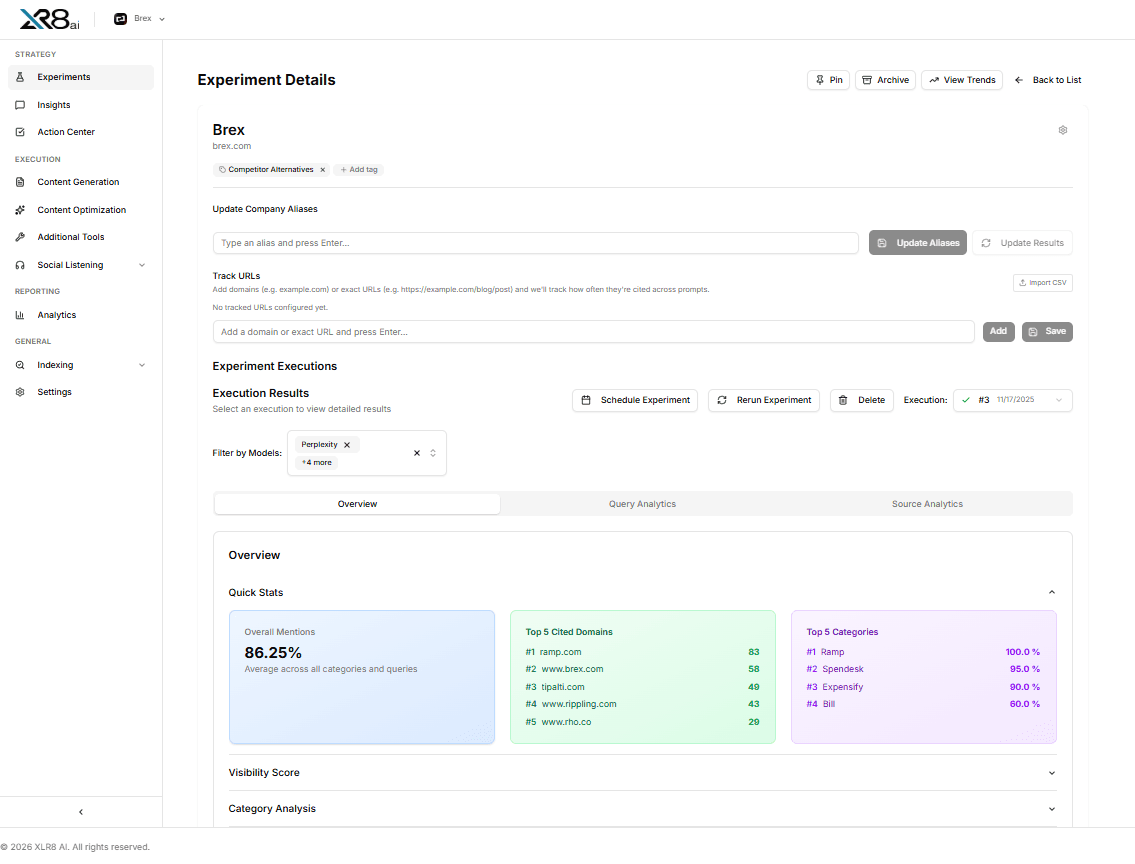
To explore how travel brands win AI recommendations with GEO, it's crucial to utilize platforms that deliver targeted analytics. These platforms should include functionalities like real-time coverage, reference sources, and sentiment analysis. A solution like XLR8 AI focuses on decision-driven optimization, helping teams refine documentation and listings, thereby boosting direct bookings and AI recommendations. Understanding how travel brands win AI recommendations with GEO can significantly impact your strategic planning.
FAQs about GEO in Travel
What is GEO for travel brands?
GEO helps travel companies get recommended inside AI-generated answers when people ask trip-planning questions. Instead of focusing only on search rankings, it focuses on making your hotel, airline, or destination easy for AI systems to understand, trust, and confidently recommend.
What types of travel questions trigger AI recommendations?
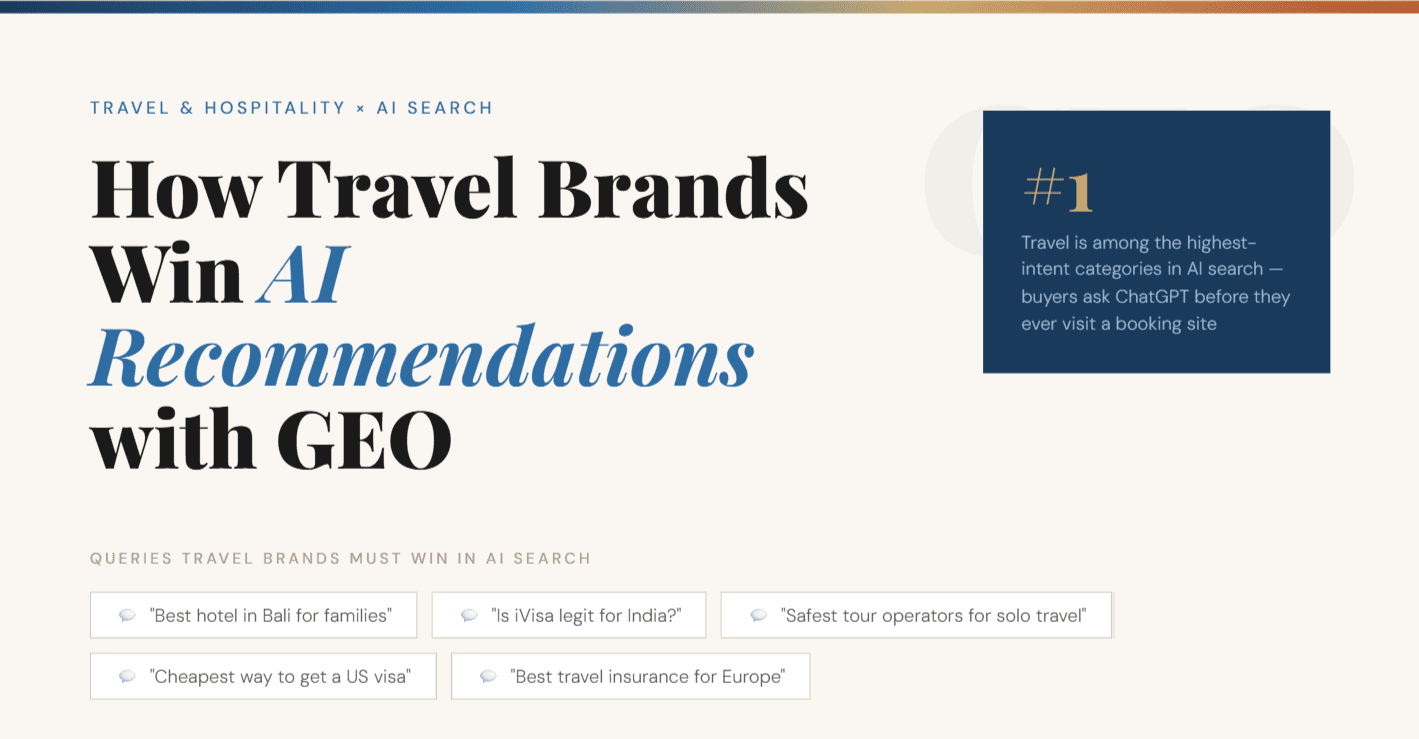
AI assistants usually recommend brands when users ask planning or comparison questions like “best hotels for families” or “where should I stay in Rome?” These high-intent queries lead AI systems to select a few trusted options rather than showing a long list of links.
Why do reviews matter for Travel GEO?
AI systems analyze reviews and community discussions to assess trust. Consistent positive feedback, detailed traveler experiences, and strong ratings increase the likelihood that your property will be recommended in AI responses. XLR8 AI help travel brands monitor the negative sentiment and helps fix it.
Do travel brands need tools to manage GEO?
Because AI recommendations change frequently, tracking visibility manually can be difficult. Platforms like XLR8 AI help travel brands monitor AI mentions, identify citation gaps, and prioritize improvements that increase recommendation likelihood.