March 6, 2026
Google Search Is Dead. Here's What Marketers Actually Need to Do Now.

The ten blue links had a 25-year run. It's over.
At Google I/O this week, Google announced what it called the biggest redesign of Search in its history and that description doesn't do justice to how fundamentally the game has changed. This isn't a UI refresh. It's a complete architectural shift in how information flows between brands and buyers.
Here are the takeaways that actually matter.
1. Google is now an LLM. Full stop.
The debate used to be "optimize for Google vs. optimize for ChatGPT." That framing is already obsolete. Google's new Search doesn't return links — it builds interactive, generative experiences on the fly using Gemini Flash 3.5. It dispatches AI agents that browse the web on your behalf 24/7. It builds mini apps in response to natural language prompts.
Google is no longer a directory. It is a reasoning engine. The same kind that powers ChatGPT, Perplexity, and Grok.
This matters enormously because it means the channel distinction is collapsing. Google, ChatGPT, Perplexity — they are all running on the same fundamental architecture: large language models trained on the web, synthesizing answers, citing sources selectively. The question "which AI platform should I optimize for?" is the wrong question. The right question is: "What does any AI say about my brand?"
2. Traffic is the wrong metric. Stop measuring it.
AI Overviews now reach 2.5 billion monthly users. AI Mode — Google's conversational search — already tops 1 billion. When an AI Overview answers a query, users don't click. The answer is the destination.
Referral traffic from Google has been in freefall for two years. This announcement is the trapdoor falling. Publishers have already been casualties. Marketers who still report "organic traffic" as a primary KPI are measuring the obituary, not the business.
The new metric is AI presence: Does your brand appear in AI-synthesized answers? How is it described? What's the sentiment? Is it cited accurately or misrepresented? These are the signals that determine whether an AI — and through it, a buyer — considers you, recommends you, or ignores you.
3. The SEO playbook is over. Now, you need to convince AI.
Traditional SEO was about ranking pages so humans could click them. GEO — Generative Engine Optimization — is about training AI models to represent your brand accurately, favorably, and frequently when they synthesize answers.
The tactics are different. You're not optimizing for a crawler index. You're optimizing for an LLM's understanding of your brand. That means:
Being cited in authoritative sources the models train on
Using precise, query-matching language in your content (descriptive URLs and schema matter — AI models cite content it can parse and verify)
Ensuring your brand's narrative is consistent, distinctive, and structurally clear across the web
Monitoring how different LLMs describe you — because GPT-5, Gemini, and Perplexity don't always agree
4. The information agent era means your brand needs to be "agent-ready"
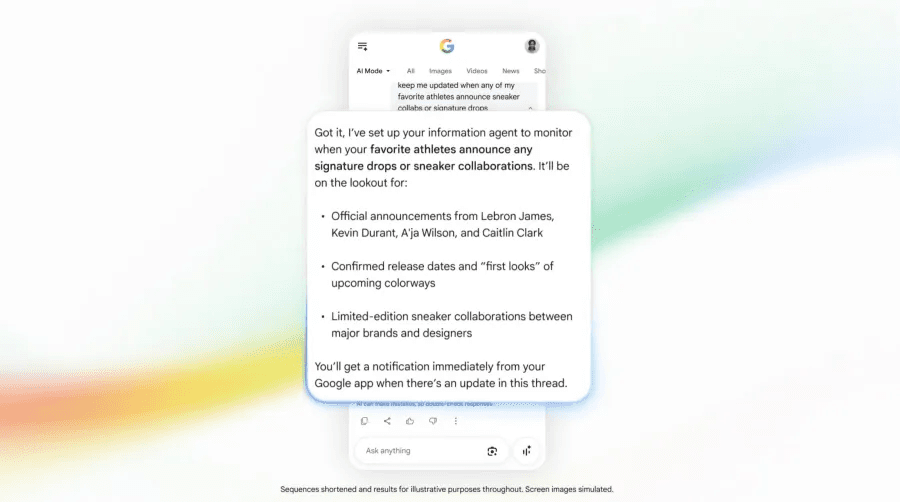
Google's new "information agents" run 24/7, monitoring the web on behalf of users. This means AI agents — not humans — will be the first contact point for a significant portion of discovery queries. An agent researching "best project management tools for remote teams" will synthesize, rank, and recommend without a human ever typing a search.
If your brand isn't clearly, accurately represented in the data these agents draw from, you don't exist in that decision loop. This is the AI equivalent of not ranking on page one — except there's no page two to fall back on.
5. The window to act is right now
Generative UI rolls out this summer, free to all Google users. Mini apps and information agents hit AI Pro and Ultra subscribers first — but Google's stated goal is broad accessibility. Sundar Pichai said it plainly: they want to bring frontier AI to as many people as possible.
This isn't a "watch and wait" moment. The brands that establish strong AI presence now, while the models are still learning and citations are still being shaped, will have a compounding advantage. Early GEO movers will be the ones AI recommends by default.
The channel doesn't matter. Sell to the AI, and you're visible everywhere.
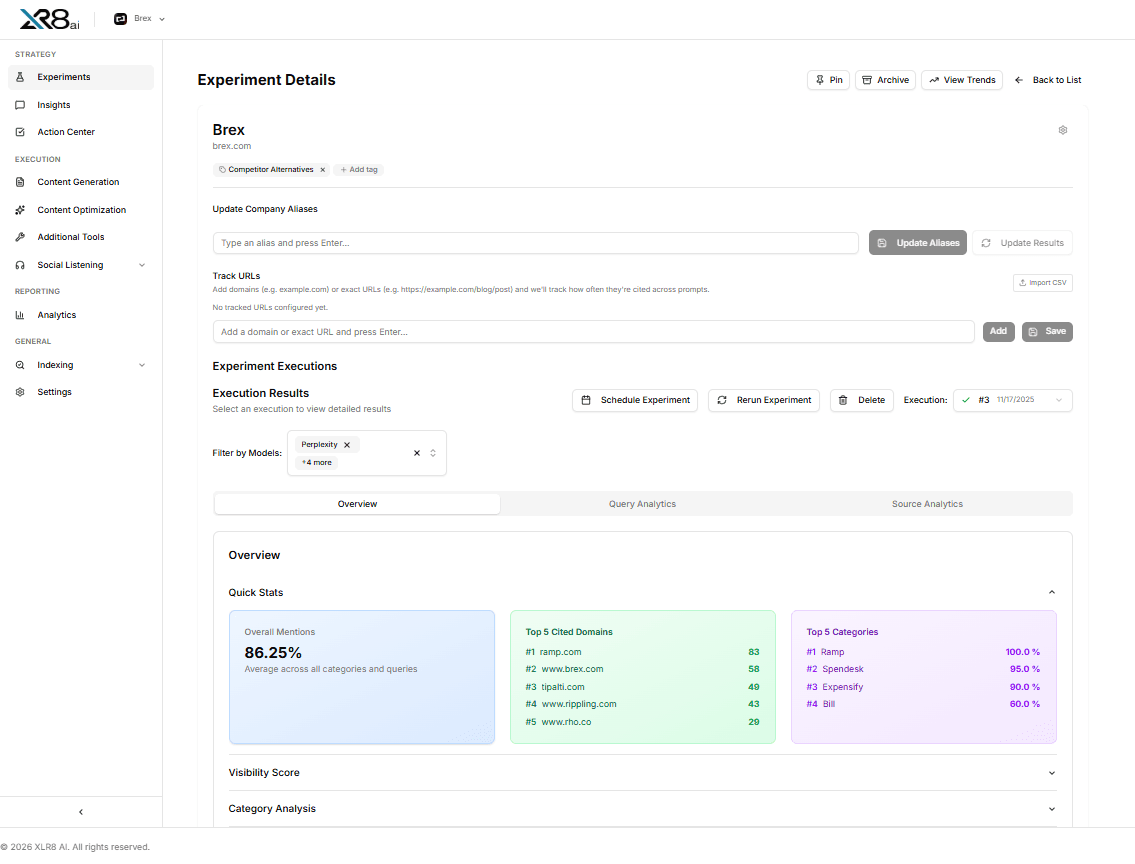
XLR8 AI was built exactly for this moment — tracking where your brand appears across LLMs, how it's described, and what drives or hurts your AI visibility. tryxlr8.ai